Portfolio-Level Hedging for Iron Condor Traders: Using VIX Calls as Insurance
Portfolio-Level Hedging for Iron Condor Traders: Using VIX Calls as Insurance Portfolio-Level Hedging for Iron Condor Traders: Using VIX Calls as Insurance In the world of options trading, strategies like the Iron Condor are highly popular for their ability to generate consistent
Abstract
Portfolio-Level Hedging for Iron Condor Traders: Using VIX Calls as Insurance Portfolio-Level Hedging for Iron Condor Traders: Using VIX Calls as Insurance In the world of options trading, strategies like the Iron Condor are highly popular for their ability to generate consistent
Portfolio-Level Hedging for Iron Condor Traders: Using VIX Calls as Insurance
In the world of options trading, strategies like the Iron Condor are highly popular for their ability to generate consistent income through premium collection. These strategies thrive in range-bound markets, capitalizing on time decay (theta) and declining implied volatility. However, the very nature of selling premium exposes traders to significant tail risk – sudden, sharp market movements that can quickly turn a profitable position into a substantial loss. At Volatility Anomaly, we constantly emphasize not just trade entry and management, but also robust risk mitigation. This article delves into a critical, often overlooked aspect of portfolio management for Iron Condor traders: implementing effective portfolio hedge options, specifically focusing on using VIX call hedges as a form of insurance against market dislocations.
Imagine a market environment where your portfolio is laden with short premium positions – Iron Condors on SPY, QQQ, and even individual stocks like AAPL or TSLA. While these positions are designed to profit from stability, what happens when an unforeseen event, a "black swan," sends the market plummeting? Your short puts are suddenly deep in the money, and your carefully constructed profit zones are breached. This is where a well-placed iron condor hedge becomes indispensable. We will explore how long VIX calls, or alternatively long SPX puts, can act as a counterbalance, providing a much-needed financial cushion when volatility spikes and equity markets tumble. This isn't about predicting the unpredictable; it's about preparing for it, ensuring your capital is protected and your trading journey remains sustainable.
Why Portfolio Hedging Matters for Short Premium Traders Now
The current market landscape, characterized by elevated geopolitical tensions, persistent inflation concerns, and a shifting interest rate environment, makes the case for robust portfolio hedging more compelling than ever. While the S&P 500 (SPX) has shown remarkable resilience, periods of calm often precede bursts of volatility. For traders who predominantly employ short premium strategies like Iron Condors, the allure of consistent income can sometimes overshadow the inherent risks.
Consider the typical Iron Condor setup: you sell out-of-the-money (OTM) calls and OTM puts, aiming for the underlying asset to expire between your short strikes. This strategy thrives on high implied volatility (IV) at entry, as it allows for collecting more premium for a given risk profile. However, when IV is high, it often signals market uncertainty, meaning the probability of a large move, either up or down, is also elevated. Our Volatility Anomaly screeners often highlight opportunities in high IV Rank environments (e.g., above 70% IV Rank), which are ideal for initiating short premium trades. But this also means we are entering trades where the market is pricing in larger potential moves.
The core challenge for Iron Condor traders is that their profit profile is capped, while their loss potential is theoretically unlimited (though practically limited by defined risk spreads). A sudden 5% or 10% drop in the S&P 500 over a few days can wipe out weeks or even months of accumulated premium. This is particularly true if your short put strikes are breached. While individual trade adjustments can help, a systemic market downturn can overwhelm even the most diligent management of single positions.
Furthermore, the correlation between implied volatility and equity prices is typically inverse: when stocks fall, volatility (as measured by the VIX) tends to spike. This inverse relationship is precisely what makes VIX calls such an attractive hedging instrument. As your short equity options positions suffer during a market downturn, your long VIX calls will likely appreciate significantly, offsetting a portion of those losses. This isn't about eliminating risk entirely, but about mitigating tail risk – those low-probability, high-impact events that can devastate an unprepared portfolio. Without such a hedge, a single significant market correction could force a trader to liquidate positions at substantial losses, eroding capital and confidence.
Core Concept Deep Dive: VIX Calls as Portfolio Insurance
The VIX, often called the "fear index," measures the market's expectation of 30-day forward-looking volatility for the S&P 500. It typically moves inversely to the S&P 500. When the market is calm and rising, the VIX tends to be low (e.g., 12-18). When fear grips the market and stocks fall sharply, the VIX can spike dramatically (e.g., from 20 to 40 or even 80+ during extreme events). This characteristic makes long VIX calls an excellent choice for a portfolio-level hedge against a broad market downturn.
Understanding the Mechanics of VIX Call Hedging
- Inverse Correlation: The primary reason for using VIX calls is their strong negative correlation with equity markets. As your short premium positions (Iron Condors on SPY, QQQ, etc.) lose money during a market sell-off, the VIX will likely surge, causing your long VIX calls to increase in value.
- Convexity: VIX options exhibit significant convexity. A small increase in the VIX from a low base can lead to a substantial percentage gain in OTM VIX calls. For instance, if the VIX jumps from 15 to 25, a VIX 20 Call might explode in value.
- Defined Risk: Buying calls means your maximum loss is limited to the premium paid for the options. This is crucial for a hedging strategy, as you want the hedge itself to have a predictable, manageable cost.
- Cost-Effectiveness: Compared to holding a large cash reserve or buying protective puts on every single underlying in your portfolio, a single VIX call position can offer broad market protection at a relatively lower cost.
Choosing the Right VIX Calls
Selecting the appropriate VIX calls involves several considerations:
- Strike Price: We typically look for out-of-the-money (OTM) VIX calls. A common approach is to target strikes that are 10-25% above the current VIX level. For example, if the VIX is at 15, you might consider VIX 18 or VIX 20 calls. The further OTM, the cheaper the option, but also the less likely it is to be profitable unless there's a significant spike. A delta range of 0.10 to 0.25 is often a good starting point for these OTM hedges, balancing cost with responsiveness.
- Expiration Date: Given that VIX options are based on futures, they are subject to contango and backwardation. Longer-dated VIX calls (e.g., 2-4 months out) offer more time for a market event to unfold and are less susceptible to rapid time decay than front-month options. However, they are also more expensive. A sweet spot is often 60-90 days to expiration (DTE), balancing cost and decay.
- Number of Contracts: This is a critical decision tied to your portfolio size and risk tolerance. A common heuristic is to size the VIX hedge such that its potential profit during a significant market downturn (e.g., VIX doubles) could offset 1-2% of your total portfolio value. For example, if you have a $100,000 portfolio, you might aim for the hedge to generate $1,000-$2,000 in profit during a crisis.
- Cost as a Percentage of Portfolio: The cost of the hedge should be manageable, typically 0.5% to 1.5% of your total portfolio value per hedging cycle. This is the "insurance premium" you pay.
Alternative: SPX Puts as a Hedge
While VIX calls are excellent for hedging volatility spikes, long SPX puts offer a more direct hedge against a decline in the broad market.
- Direct Market Exposure: SPX puts directly profit when the S&P 500 falls. There's no reliance on the VIX's inverse correlation, which can sometimes lag or behave unexpectedly.
- Liquidity: SPX options are among the most liquid in the world, offering tight bid-ask spreads and easy entry/exit.
- Strike and Expiration: Similar to VIX calls, you'd look for OTM SPX puts (e.g., 5-10% below current SPX levels) with 60-90 DTE. A delta of -0.10 to -0.25 is a reasonable target.
- Cost: SPX puts can be more expensive than VIX calls for comparable protection, especially if implied volatility is low. The cost can also be a higher percentage of your portfolio, depending on the desired level of protection.
Many traders choose a combination of both VIX calls and SPX puts to diversify their hedging strategy, capturing both volatility spikes and direct market declines.
Practical Application: Implementing a VIX Call Hedge
Let's walk through a concrete example of how an Iron Condor trader might implement a VIX call hedge. Assume a portfolio of $150,000, heavily invested in short premium strategies on various tickers like SPY, QQQ, and AAPL. The current market sentiment is relatively calm, but the trader wants to protect against a potential 5-10% market correction.
Scenario Setup (as of early 2024 data for illustration):
- Date: January 15, 2024
- SPX: ~4780
- VIX: ~13.50 (IV Rank for VIX is low, say 20%)
- Portfolio Value: $150,000
- Current Iron Condor Positions: Multiple Iron Condors across SPY, QQQ, AAPL, AMZN, with an aggregate maximum loss exposure (if all go wrong) of around $15,000-$20,000.
- Hedging Goal: Offset 1-2% of portfolio value ($1,500-$3,000) in case of a significant market downturn.
Step-by-Step Implementation:
1. Determine Hedge Type and Cost Allocation
Given the low VIX, VIX calls are relatively inexpensive. We decide to allocate 0.75% of the portfolio value to the hedge, which is $1,125.
2. Select VIX Call Parameters
- Expiration: We look for VIX options expiring in 60-90 days. Let's choose the March 20, 2024 expiration (65 DTE).
- Strike Price: With VIX at 13.50, we want OTM calls that would benefit from a VIX spike to 20-25.
- VIX 18 Call: Delta ~0.20, Ask Price: $0.75
- VIX 20 Call: Delta ~0.15, Ask Price: $0.50
- Decision: The VIX 18 Call offers a good balance of responsiveness and cost. Its delta of 0.20 means it will gain 20 cents for every $1 move in the VIX (all else equal).
3. Calculate Number of Contracts
- Cost per contract: $0.75 * 100 = $75
- Total budget for hedge: $1,125
- Number of contracts: $1,125 / $75 = 15 contracts
Action: Buy 15 contracts of VIX March 20, 2024 18 Calls for $0.75 each. Total cost: $1,125.
4. Monitor and Manage the Hedge
The hedge is not a "set it and forget it" strategy.
-
Scenario A: Market Remains Calm (VIX stays low or declines)
- The VIX 18 Calls will gradually lose value due to time decay.
- If the VIX remains below 15, these calls might be worth $0.20-$0.30 closer to expiration.
- Management: As expiration approaches (e.g., 30 DTE), if no market event has occurred, the trader might close the existing hedge for a loss (e.g., $0.25 * 15 contracts * 100 = $375 loss) and re-establish a new hedge further out in time. This is the cost of insurance.
-
Scenario B: Market Correction (VIX spikes)
- Example Event: A sudden geopolitical crisis causes SPX to drop 7% over a week. VIX spikes from 13.50 to 28.00.
- Your Iron Condors on SPY, QQQ, etc., are likely showing significant unrealized losses. For instance, a SPY 470/475/485/490 Iron Condor (short 475 put, long 470 put) might now have its short put at 475 deeply in the money, showing a loss of $1,000-$1,500 per contract.
- The VIX March 20, 2024 18 Calls, with VIX at 28.00, are now deep in the money. Their value could easily be $10.00-$11.00 per contract.
- Profit from Hedge: (10.50 - 0.75) * 15 contracts * 100 = $14,625.
- This profit significantly offsets the losses from the short premium positions. Even if your Iron Condors collectively lost $10,000, the hedge has provided a substantial buffer.
- Management: At this point, the trader could close out a portion or all of the profitable VIX calls to realize profits and use the capital to manage the losing Iron Condors (e.g., roll down puts, close positions). Alternatively, they might hold a portion if they expect further volatility.
5. Rebalance and Re-evaluate
Hedging is an ongoing process.
- After an event, or as existing hedges approach expiration, re-evaluate your portfolio's risk profile, market conditions, and the cost of new hedges.
- Adjust the size and strike of your VIX calls based on the current VIX level and your updated risk assessment. For instance, if VIX is now at 28, you might buy VIX 30 or 35 calls for the next hedging cycle.
Integrating with Volatility Anomaly Tools
Our Volatility Anomaly platform can assist in this process:
- Automated Screener: While primarily for identifying short premium opportunities, it also helps you understand the overall IV environment, which informs your hedging decisions. If the screener shows a broad increase in IV across many tickers, it might be a sign to beef up your hedge.
- Position Monitoring: Our tools allow you to track the performance of your entire portfolio, including your hedges, providing real-time P&L and risk metrics. This helps you decide when to adjust or close your VIX calls.
- Weekly Picks & Analysis: Our weekly market commentary often highlights macro risks and volatility expectations, guiding your hedging strategy.
Risk Management for VIX Call Hedges
While VIX calls offer powerful protection, they are not without their own set of risks and considerations. A well-designed hedging strategy must acknowledge these potential pitfalls.
1. Cost of Carry (Time Decay)
The most significant risk for long VIX calls is time decay (theta). If the market remains calm and the VIX does not spike, your long VIX calls will steadily lose value as they approach expiration. This is the "insurance premium" you pay.
-
Mitigation:
- Manage Expiration: Choose options with sufficient time to expiration (e.g., 60-90 DTE) to minimize rapid theta decay. Avoid front-month VIX options for hedging unless you expect an immediate event.
- Cost Allocation: Ensure the cost of your hedge (e.g., 0.5% - 1.5% of portfolio per cycle) is acceptable and budgeted as a regular expense, similar to paying for car or home insurance.
- Roll, Don't Hold to Zero: If the VIX remains low and your calls are losing value, consider rolling them out to a further expiration before they become worthless, especially if you still perceive tail risk.
2. VIX Contango and Backwardation
VIX futures, on which VIX options are based, typically trade in contango (further-out months are more expensive than nearer months). This means that as time passes, the value of a VIX option can erode even if the spot VIX remains flat, due to the futures curve flattening or shifting. During extreme market stress, the VIX curve can flip into backwardation (nearer months more expensive), which can be beneficial for long VIX positions, but this is rare.
-
Mitigation:
- Understand the Curve: Regularly check the VIX futures curve. If contango is steep, the cost of holding long VIX options can be higher.
- Adjust Expiration: In steep contango, shorter-dated options might be less affected by the roll-down effect, but they also have higher theta. It's a balance.
3. Imperfect Correlation
While the VIX generally moves inversely to the S&P 500, this correlation is not perfect. There can be instances where the market drops, but the VIX doesn't spike as much as expected, or vice-versa.
-
Mitigation:
- Diversify Hedges: Consider a combination of VIX calls and SPX puts. SPX puts offer direct protection against market declines, while VIX calls protect against volatility spikes.
- Sizing: Don't over-rely on the hedge to perfectly offset all losses. Its role is to mitigate tail risk, not to make you profitable during a crash.
4. Sizing the Hedge Incorrectly
Too small a hedge will be ineffective; too large a hedge will be a drag on performance during calm markets.
-
Mitigation:
- Portfolio-Based Sizing: As discussed, size the hedge as a percentage of your total portfolio value (e.g., 0.5% - 1.5% cost per cycle).
- Risk Assessment: Adjust hedge size based on your overall portfolio delta and gamma exposure. If you have a very large net short delta from your Iron Condors, you might need a larger hedge.
- Regular Review: Re-evaluate your hedge sizing periodically (e.g., monthly) or when market conditions significantly change.
5. Liquidity of VIX Options
While VIX options are liquid, very far OTM options or those with very short or very long expirations might have wider bid-ask spreads.
-
Mitigation:
- Stick to Liquid Strikes/Expirations: Focus on the more active VIX options.
- Use Limit Orders: Always use limit orders when trading VIX options to avoid getting filled at unfavorable prices.
The goal of hedging is not to eliminate risk entirely, but to manage it proactively. By understanding and mitigating these risks associated with VIX call hedges, Iron Condor traders can build a more resilient and sustainable portfolio.
Advanced Considerations for Experienced Traders
For experienced traders operating larger portfolios or seeking more nuanced hedging strategies, there are several advanced concepts and techniques to consider beyond simply buying OTM VIX calls.
1. Dynamic Hedging and Delta Management
Instead of a static hedge, experienced traders might implement dynamic hedging. This involves adjusting the size and strike of the hedge based on real-time market conditions and the portfolio's overall delta and gamma exposure.
- Portfolio Delta: Monitor your portfolio's net delta. If your Iron Condors collectively have a slight bullish bias (positive net delta) or a bearish bias (negative net delta), you can adjust your hedge accordingly. For example, if your portfolio has a net positive delta of +100 (equivalent to 100 shares of SPY), you might need more SPX put protection or VIX calls that react strongly to downward moves.
- Gamma Scalping: During periods of high volatility, the gamma of your VIX calls (or SPX puts) will increase. Experienced traders might "gamma scalp" these hedges, selling some of the calls as they become more in-the-money during a spike, and then re-establishing them at higher strikes or further out in time as volatility subsides, effectively locking in profits from the hedge.
- VIX ETPs: While not options, VIX Exchange Traded Products (ETPs) like VXX or UVXY can be used for short-term, tactical hedges. However, these products are subject to significant contango decay and are generally unsuitable for long-term holding. They are best used for very short-term, aggressive hedges when an immediate spike in volatility is anticipated.
- VIX Futures Spreads: Instead of outright VIX calls, one could trade VIX futures spreads (e.g., buying a near-month future and selling a further-month future) to capitalize on backwardation during a crisis or to manage contango more efficiently. This is a more complex strategy requiring direct futures access.
2. Combining VIX Calls with SPX Puts
As briefly mentioned, a diversified hedging strategy often involves a combination of VIX calls and SPX puts.
- VIX Calls: Excel in capturing the "fear spike" and convexity of volatility. They are particularly effective when the VIX is low (e.g., below 15-18), as the percentage increase from a low base can be enormous.
- SPX Puts: Provide more direct, linear protection against market declines. They are less reliant on the VIX's specific behavior and can be a good complement when the VIX is already elevated, making VIX calls less attractive.
- Example Allocation: A trader might allocate 60% of their hedging budget to VIX calls and 40% to SPX puts, or adjust this ratio based on current market conditions and their outlook on volatility vs. direct market movement. For instance, if the market is slowly grinding lower without a sharp VIX spike, SPX puts might perform better.
3. Hedging Against Specific Sector Risk
While VIX calls and SPX puts offer broad market protection, a portfolio heavily concentrated in a specific sector (e.g., tech, financials) might benefit from additional, targeted hedges.
- Sector ETFs: For example, if you have many Iron Condors on tech stocks (AAPL, MSFT, NVDA), you might consider buying OTM puts on the QQQ (Nasdaq 100 ETF) or XLK (Technology Select Sector SPDR Fund). These provide more direct protection against a tech-specific downturn that might not trigger a massive VIX spike.
- Correlation Analysis: Use tools to analyze the correlation of your individual positions with the broader market and specific sectors to identify potential concentration risks.
4. Using VIX Call Spreads
To reduce the cost of long VIX calls, some traders might employ VIX call spreads (e.g., buying a VIX 18 Call and selling a VIX 25 Call).
- Benefit: Reduces the initial premium paid for the hedge.
- Drawback: Caps the potential profit of the hedge. If the VIX spikes to 40, your VIX 25 short call will limit your gains. This makes the hedge less effective for extreme tail events but more cost-efficient for moderate volatility spikes.
- Consideration: Best used when you have a specific target range for the VIX spike, rather than for truly undefined "black swan" events.
These advanced considerations underscore that hedging is an art as much as a science. It requires continuous learning, adaptation, and a deep understanding of market dynamics and option greeks. At Volatility Anomaly, we encourage traders to evolve their strategies, moving from basic concepts to sophisticated techniques as their experience and capital grow.
Conclusion & Key Takeaways
For Iron Condor traders, the pursuit of consistent premium income must be balanced with a robust defense against market dislocations. While these strategies are powerful income generators in range-bound markets, their inherent short volatility exposure makes them vulnerable to sudden, sharp market movements. Implementing a portfolio-level hedge, particularly through the strategic use of VIX calls or SPX puts, is not merely an option but a critical component of sustainable risk management.
This article has demonstrated how VIX calls, leveraging their inverse correlation with equity markets and their convex payoff profile, can serve as an effective and relatively cost-efficient form of insurance. By allocating a small, defined portion of your portfolio to these hedges, you can create a financial buffer that significantly mitigates the impact of tail events, protecting your capital and allowing you to remain in the game even during turbulent times. Remember, the goal is not to predict the next market crash, but to prepare for it, ensuring that your portfolio can weather the storm and continue to generate income over the long term.
Key Takeaways for Iron Condor Traders:
- Proactive Hedging is Essential: Don't wait for a market downturn to consider protection. Integrate portfolio hedge options as a standard component of your trading plan.
- VIX Calls Offer Convex Protection: Long VIX call hedges profit significantly when the VIX spikes during market downturns, offsetting losses from short premium positions.
- SPX Puts for Direct Market Decline Protection: Consider long SPX puts as a complementary hedge for direct protection against broad market drops, especially if VIX is already elevated.
- Strategic Sizing and Expiration: Target OTM VIX calls (delta 0.10-0.25) or SPX puts (delta -0.10 to -0.25) with 60-90 DTE. Allocate 0.5% to 1.5% of your portfolio value to the hedge per cycle.
- Manage the "Insurance Premium": Accept that hedges have a cost (time decay). Be prepared to roll or close hedges for a loss if no market event occurs, viewing it as the ongoing cost of portfolio insurance.
- Dynamic Management: Actively monitor your hedge's performance and adjust its size and strike based on market conditions, VIX levels, and your overall portfolio risk profile.
- Leverage Volatility Anomaly Tools: Utilize our screeners and monitoring tools to stay informed about market volatility and manage your hedges effectively.
#VolatilityAnomaly · #IVRank · #OptionsTrading · #VRP
You Might Also Like
Volatility Anomaly
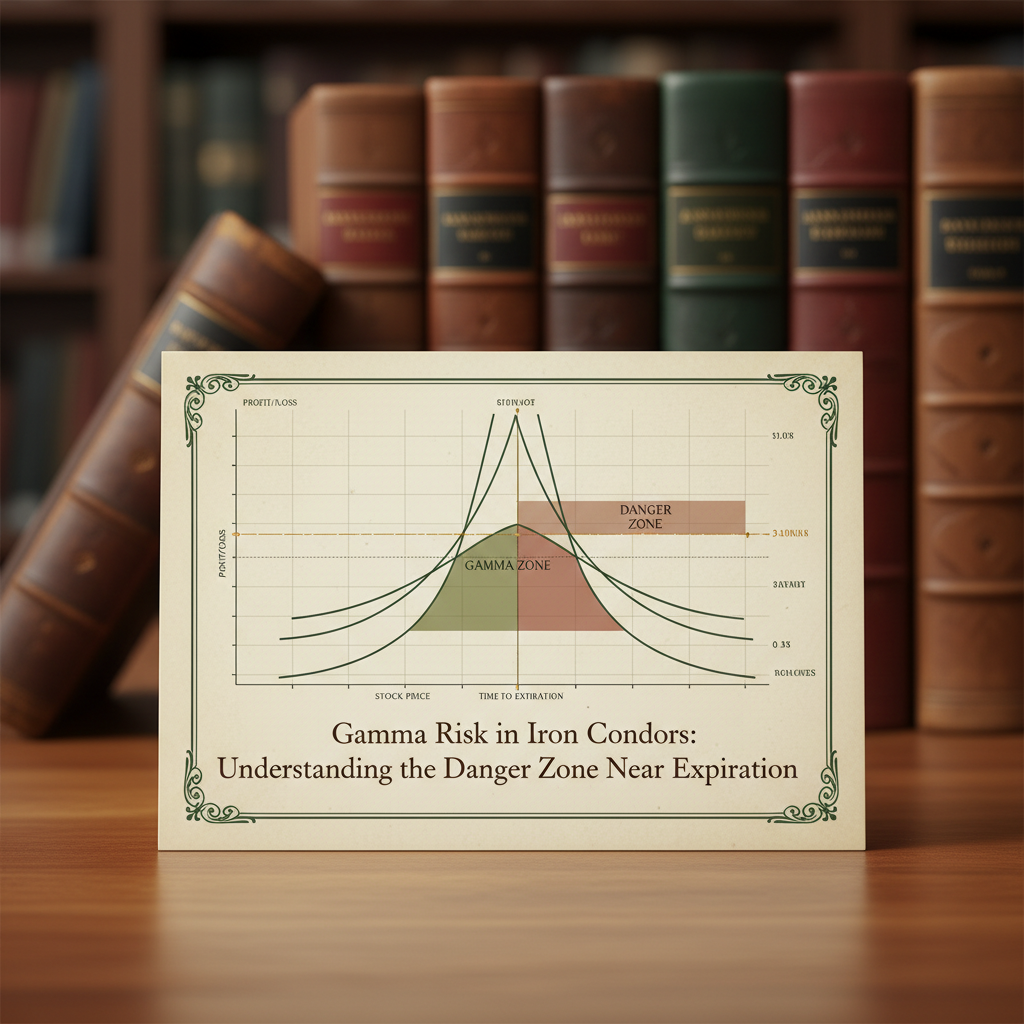
Gamma Risk in Iron Condors: Understanding the Danger Zone Near Expiration
Gamma Risk in Iron Condors: Understanding the Danger Zone Near Expiration As options traders, we often seek strategies that offer defined risk and a high probability of profit. The iron condor, a staple in many portfolios, perfectly embodies this philosophy. By selling out-of-the
Jan 1970
Volatility Anomaly
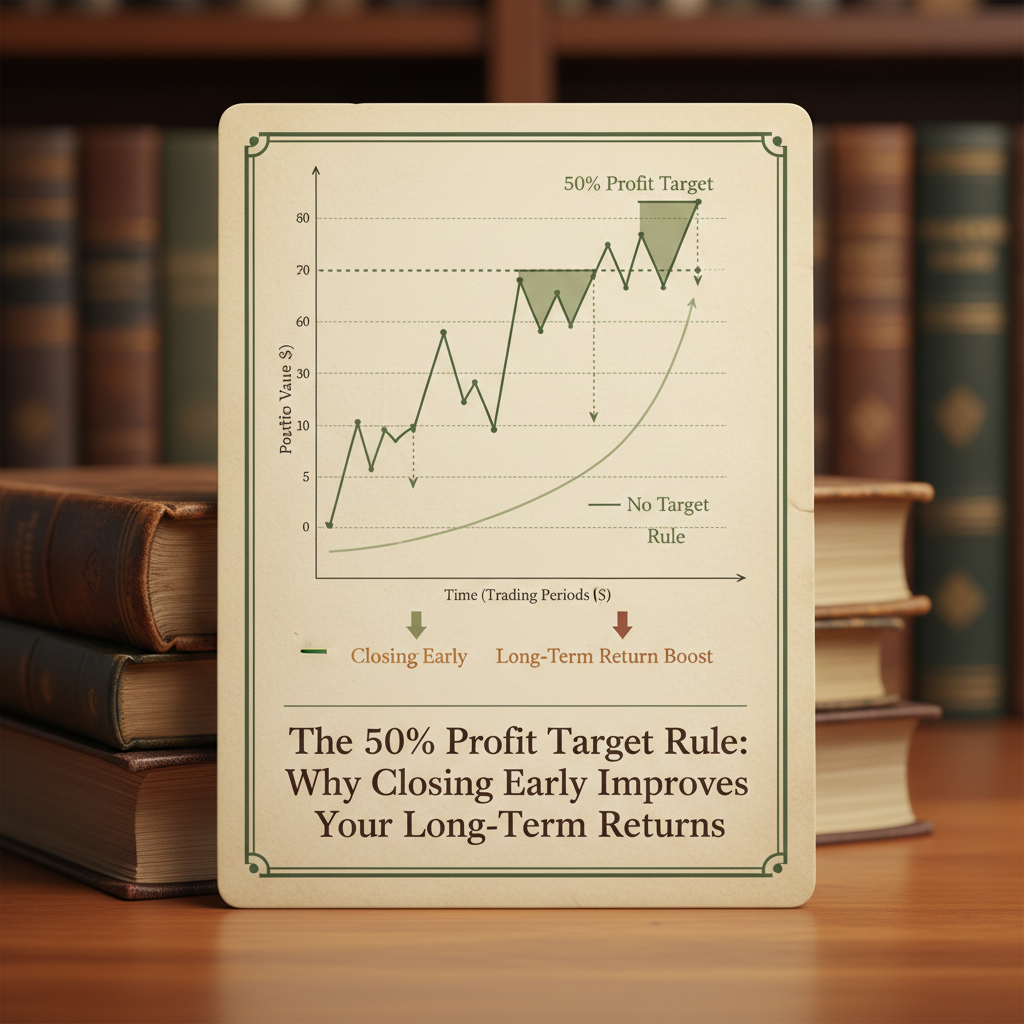
The 50% Profit Target Rule: Why Closing Early Improves Your Long-Term Returns
The 50% Profit Target Rule: Why Closing Early Improves Your Long-Term Returns In the dynamic world of options trading, the pursuit of maximum profit often leads to suboptimal outcomes. Traders, driven by the allure of capturing every last penny, frequently hold positions until ex
Jan 1970
YOU MIGHT ALSO LIKE
Gamma Risk in Iron Condors: Understanding the Danger Zone Near Expiration
Gamma Risk in Iron Condors: Understanding the Danger Zone Near Expiration As options traders, we often seek st…
Read articleThe 50% Profit Target Rule: Why Closing Early Improves Your Long-Term Returns
The 50% Profit Target Rule: Why Closing Early Improves Your Long-Term Returns In the dynamic world of options…
Read articleMax Loss Management: When to Take the Loss and Move On
Max Loss Management: When to Take the Loss and Move On Max Loss Management: When to Take the Loss and Move On…
Read articleThis article is for educational purposes only and does not constitute financial or investment advice. Options trading involves significant risk of loss and is not suitable for all investors. Past performance is not indicative of future results.